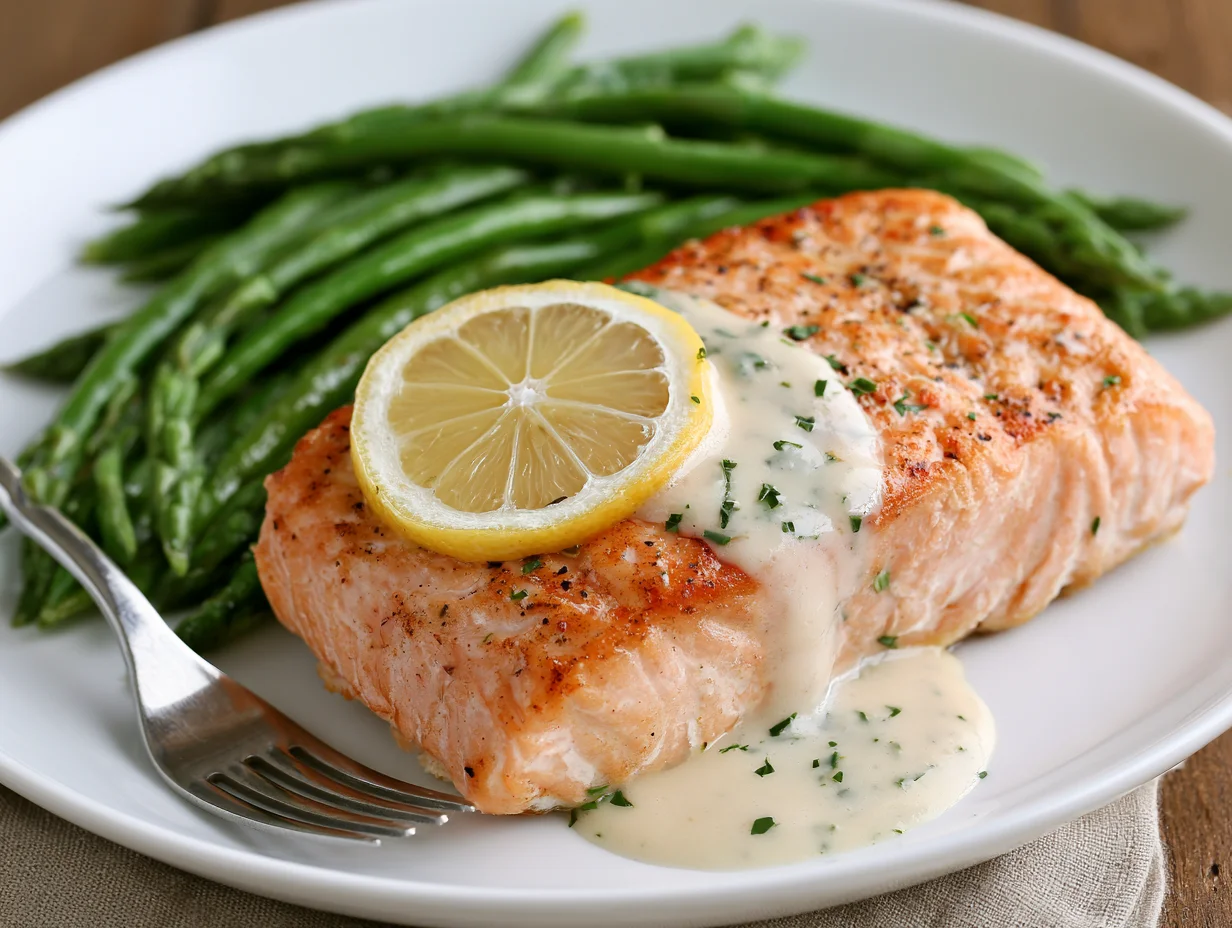
Baked Salmon with Lemon Butter Cream Sauce is a restaurant-quality seafood dish that brings together richness, freshness, and elegance in a single plate. This recipe is crafted for home cooks who want gourmet results without complicated techniques or professional equipment.
At the heart of this dish is perfectly baked salmon—tender, flaky, and naturally flavorful. It is elevated with a silky lemon butter cream sauce that adds brightness, depth, and a luxurious finish. This balance of richness and acidity is what makes the recipe highly searchable in premium food categories like “easy baked salmon,” “creamy lemon butter sauce,” and “healthy seafood dinner ideas.”
What sets this recipe apart is its consistency and versatility. It works beautifully for weeknight dinners, meal prep, or even special occasions where presentation matters. The ingredients are simple, but the execution creates a fine-dining experience at home.
If you are looking for a high-protein, low-effort recipe that delivers both flavor and elegance, this baked salmon is a dependable choice that never disappoints.
Ingredients You’ll Need
A great salmon dish is built on precision—each ingredient enhances texture, richness, and freshness without overpowering the natural flavor of the fish.
One of the things I love about this recipe is that it uses simple pantry ingredients. You probably already have most of them in your kitchen.
Base Ingredients:
- 4 salmon fillets (about 150–180g each)
- 2 tablespoons olive oil
- 1 teaspoon salt
- 1/2 teaspoon black pepper
- 1 teaspoon garlic powder
- 1 tablespoon lemon juice
- 2 tablespoons unsalted butter
- 1 cup heavy cream
- 2 cloves garlic (minced)
- 1 tablespoon fresh parsley (chopped)
- 1 teaspoon lemon zest
- 1 tablespoon flour (optional for thickening)
- 1/2 cup chicken or vegetable broth
Optional Add-ins:
- 1/2 teaspoon chili flakes
- 1 teaspoon Dijon mustard
- 1 tablespoon capers
- 1/4 teaspoon smoked paprika
- 1 tablespoon grated Parmesan cheese
Step-by-Step Instructions
Prepare and Season the Salmon
Begin by patting the salmon fillets dry to ensure even baking and a better texture. Drizzle olive oil over the fillets and season generously with salt, black pepper, garlic powder, and lemon juice. Allow the salmon to rest for 10–15 minutes so the seasoning penetrates the surface. This step enhances natural flavor and ensures a moist, flaky texture after baking.
Bake the Salmon to Perfection
Preheat the oven to 200°C (400°F). Place the seasoned salmon on a lined baking tray. Bake for 12–15 minutes depending on thickness, until the fish is just cooked through and flakes easily with a fork. Avoid overbaking, as salmon continues to cook slightly after removal. Proper baking is key to achieving a tender, juicy interior.
Prepare the Lemon Butter Cream Sauce
In a pan, melt butter over medium heat and sauté minced garlic until fragrant. Add broth and bring to a gentle simmer. Stir in heavy cream and whisk until smooth. Add lemon zest and optional flour for thickening if needed. Cook until the sauce reaches a silky, pourable consistency. Adjust seasoning to balance richness with brightness.
Assemble and Serve
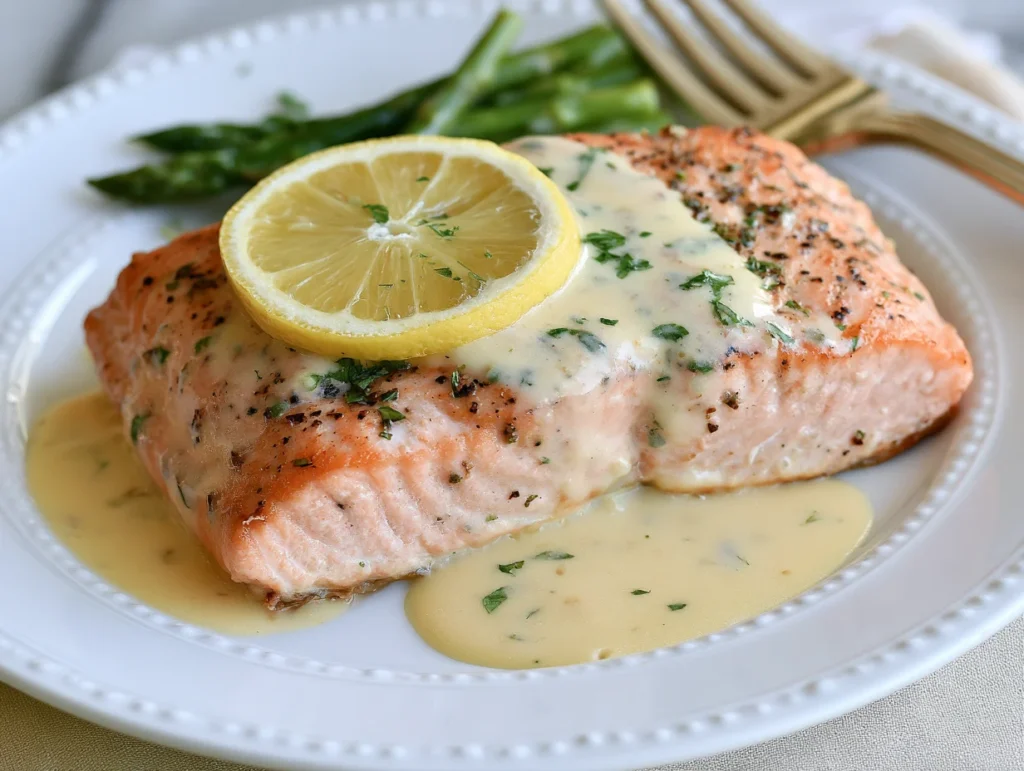
Place baked salmon on a serving plate and generously spoon warm lemon butter cream sauce over the top. Garnish with fresh parsley for color and freshness. Serve immediately with rice, mashed potatoes, or roasted vegetables. This final step ensures a restaurant-style presentation with balanced flavor in every bite.
Cook Time
Total:
30 minutes
Prep:
10 minutes
Bake:
15–18 minutes
Servings
This recipe makes approximately 4 servings, depending on the size of the salmon fillets. It is ideal for family dinners or structured meal prep where protein-rich meals are required.
Each serving provides a balanced combination of healthy fats, high-quality protein, and creamy sauce richness. This makes it suitable for both fitness-focused diets and indulgent home dining experiences.
For larger gatherings, the recipe can easily be doubled while maintaining consistent flavor and texture. Makes approximately enough for a full family-style seafood dinner.
Common Mistakes in This Recipe
Overbaking salmon is one of the most common errors, resulting in dry, tough fish instead of a moist and flaky texture. Timing is critical in seafood preparation.
Skipping the drying step before seasoning can prevent proper browning and reduce flavor absorption, leading to a less appealing texture.
Cooking the sauce on high heat can cause the cream to separate or curdle, ruining the smooth, velvety consistency that defines the dish.
Underseasoning the salmon is another frequent issue. Without proper seasoning, the dish lacks depth and relies too heavily on the sauce.
Solutions to Common Mistakes
Always monitor baking time closely and remove salmon as soon as it flakes easily. Residual heat will complete the cooking process without drying it out.
Pat salmon dry thoroughly before seasoning to ensure better texture, flavor absorption, and slight surface caramelization during baking.
Cook the cream sauce on low to medium heat, stirring constantly to maintain emulsification and prevent splitting.
Season both the fish and sauce adequately. Layered seasoning ensures balanced flavor in every bite, not just from the sauce alone.
Nutritional Information (approx. per serving)
- Calories: 480 kcal
- Protein: 38g
- Fat: 32g
- Carbohydrates: 6g
- Omega-3 fatty acids: High
- Sugar: 2g
Salmon is an excellent source of omega-3 fatty acids, which support heart health, brain function, and overall inflammation control in the body.
The high protein content supports muscle repair, satiety, and sustained energy, making it ideal for balanced diets and active lifestyles.
Lemon and garlic contribute antioxidants that support immunity and digestive health while enhancing natural flavor without excess calories.
When consumed in moderation, this dish offers both indulgence and nutritional balance, making it suitable for long-term healthy eating habits.
Storage Instructions
Store leftover salmon in an airtight container in the refrigerator for up to 2–3 days. Proper cooling before storage helps maintain texture and safety.
Keep the lemon butter cream sauce separately if possible to prevent the fish from becoming overly soft or soggy during storage.
Reheat gently on low heat or in short microwave intervals to preserve moisture and avoid overcooking the salmon.
Avoid freezing cream-based sauces, as they may separate upon thawing, affecting texture and consistency.
Suggestions
Serve this dish with garlic mashed potatoes or steamed rice to absorb the rich lemon butter sauce effectively.
Roasted asparagus, broccoli, or zucchini pairs exceptionally well, adding texture and nutritional balance to the meal.
For a lighter version, serve with quinoa or cauliflower rice to reduce carbohydrates while maintaining fullness.
A fresh side salad with citrus vinaigrette enhances brightness and complements the creamy sauce beautifully.
Seasonal Relevance
This recipe performs well year-round but is especially popular in spring when light, citrus-based dishes are in high demand.
During summer, it works as a refreshing yet satisfying protein-rich meal that does not feel overly heavy.
In autumn, it pairs well with roasted vegetables and warm sides, making it suitable for comfort-focused dining.
In winter, the creamy sauce provides richness and warmth, making it a perfect indoor comfort meal.
Final Words
Baked Salmon with Lemon Butter Cream Sauce is a refined yet approachable recipe that delivers consistent restaurant-quality results at home.
Its balance of richness, freshness, and simplicity makes it a strong performer in both everyday cooking and special occasions.
From a culinary perspective, the success of this dish lies in precision timing and proper sauce preparation, both of which are easy to master.
This is a dependable, high-value recipe that deserves a permanent place in any modern home cooking collection.
Frequently Asked Questions
Can I use frozen salmon for this recipe?
Yes, frozen salmon can be used if fully thawed and patted dry before seasoning. Proper thawing ensures even cooking and prevents excess moisture, which can affect texture and seasoning absorption during baking.
What can I substitute for heavy cream in the sauce?
You can use half-and-half or evaporated milk for a lighter version. However, the sauce may be slightly less rich and creamy compared to traditional heavy cream-based preparation.
How do I know when salmon is perfectly cooked?
Salmon is done when it flakes easily with a fork and appears opaque in the center. Internal temperature should reach about 63°C (145°F) for safe and optimal doneness.
Baked Salmon with Lemon Butter Cream Sauce Recipe
10
minutes18
minutes480
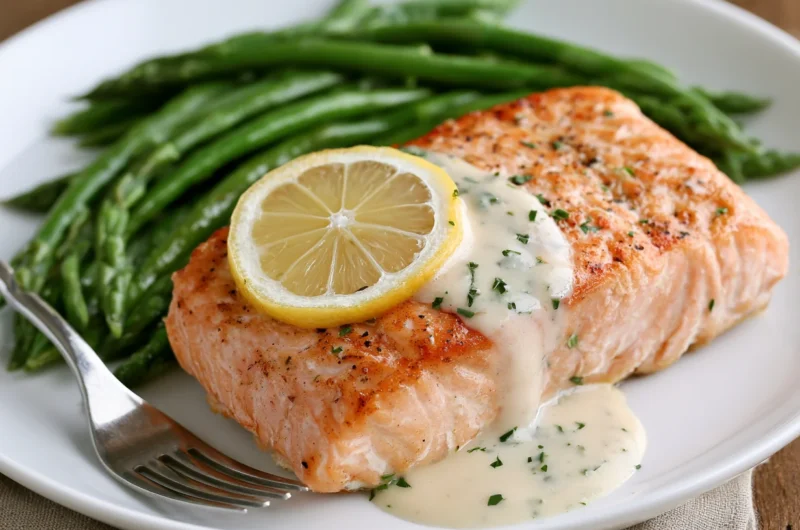
kcalBaked Salmon with Lemon Butter Cream Sauce is a rich, restaurant-style seafood dish featuring tender baked salmon topped with a silky lemon butter cream sauce. It delivers a perfect balance of freshness, richness, and high-protein nutrition for a premium home dining experience.
Ingredients
4 salmon fillets (150–180g each)
2 tablespoons olive oil
1 teaspoon salt
1/2 teaspoon black pepper
1 teaspoon garlic powder
1 tablespoon lemon juice
2 tablespoons unsalted butter
1 cup heavy cream
2 cloves garlic (minced)
1 tablespoon fresh parsley (chopped)
1 teaspoon lemon zest
1 tablespoon flour (optional)
1/2 cup chicken or vegetable broth
1/2 teaspoon chili flakes (optional)
1 teaspoon Dijon mustard (optional)
1 tablespoon capers (optional)
1/4 teaspoon smoked paprika (optional)
1 tablespoon Parmesan cheese (optional)
Directions
- Preheat oven to 200°C (400°F) and line a baking tray.
- Pat salmon dry and season with olive oil, salt, pepper, garlic powder, and lemon juice.
- Let salmon rest for 10–15 minutes for better flavor absorption.
- Place salmon on tray and bake for 12–15 minutes until flaky.
- Melt butter in a pan and sauté garlic until fragrant.
- Add broth, then stir in heavy cream and mix until smooth.
- Add lemon zest and adjust seasoning; thicken if needed.
- Place baked salmon on a plate and pour lemon butter cream sauce on top.
- Garnish with parsley and serve immediately.
Recipe Video
Notes
- Do not overbake salmon to keep it moist and flaky.
- Cook sauce on low heat to prevent curdling.
- Pat salmon dry before seasoning for better flavor absorption.
- Adjust lemon juice for preferred tanginess.
- Serve immediately for best taste and texture.