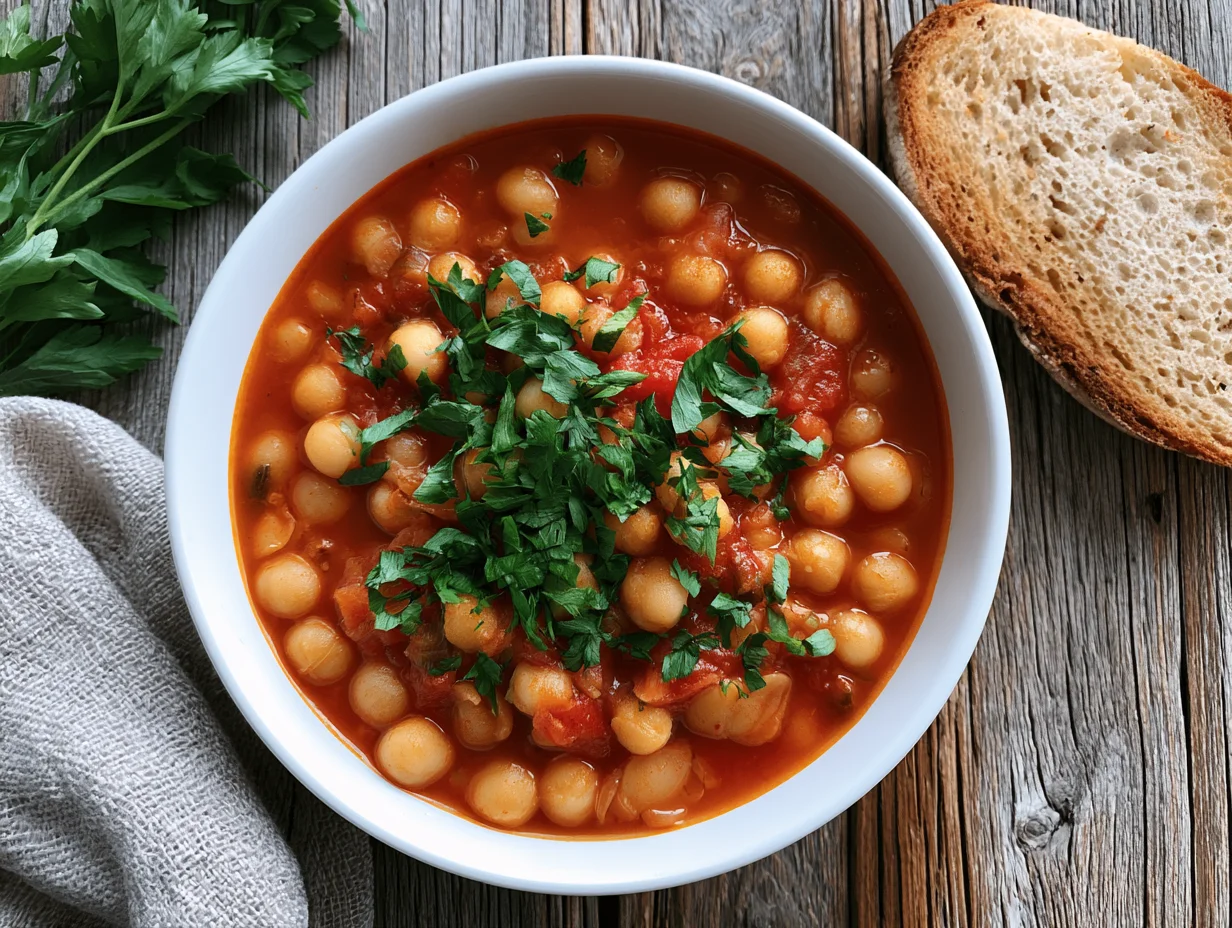
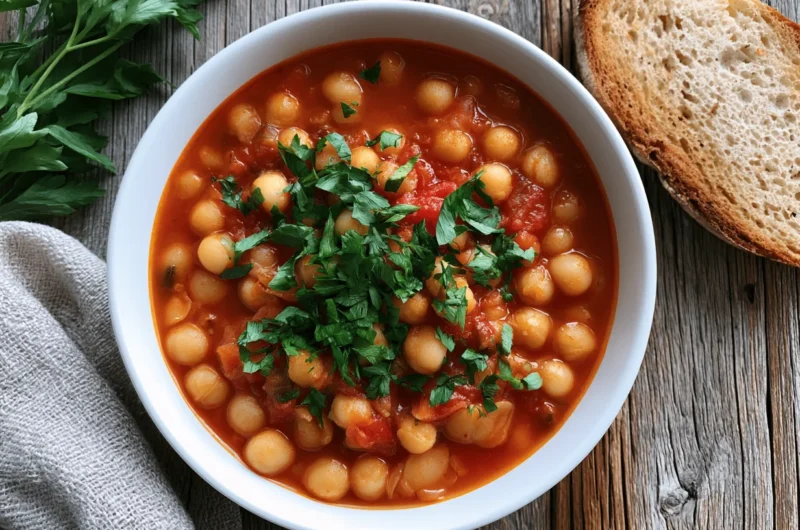
Rustic chickpea stew is the kind of dish that brings quiet comfort to the table without trying too hard. It’s hearty, deeply nourishing, and built on simple ingredients that transform beautifully when simmered together. Every spoonful feels warm, grounding, and naturally satisfying.
This stew draws its strength from humble pantry staples like chickpeas, tomatoes, and aromatic spices. As they cook slowly, the flavors deepen and merge into a rich, savory base that feels both homey and thoughtfully layered. It’s the kind of meal that tastes like it has been perfected over generations.
What makes this recipe especially appealing is its balance between nutrition and comfort. It’s filling without being heavy, flavorful without being complicated, and adaptable enough for busy weeknights or slow weekend cooking.
Whether served on its own or paired with bread or rice, this stew delivers a rustic charm that feels timeless, wholesome, and genuinely satisfying.
Ingredients You’ll Need
A truly comforting stew begins with simple ingredients that slowly build depth, aroma, and richness as they simmer together into something soulful.
One of the things I love about this recipe is that it uses simple pantry ingredients. You probably already have most of them in your kitchen.
Base Ingredients:
- 2 cups cooked chickpeas
- 2 tablespoons olive oil
- 1 medium onion, finely chopped
- 3 cloves garlic, minced
- 1 can (400g) diced tomatoes
- 1 cup vegetable broth
- 1 teaspoon ground cumin
- 1 teaspoon smoked paprika
- 1/2 teaspoon turmeric
- 1/2 teaspoon salt
- 1/4 teaspoon black pepper
- 1 bay leaf
- 1 tablespoon tomato paste
- 1 tablespoon lemon juice
Optional Add-ins:
- 1/2 cup spinach leaves
- 1/2 teaspoon chili flakes
- 1/4 cup chopped fresh parsley
- 1 teaspoon cumin seeds
- 1/2 teaspoon coriander powder
Step-by-Step Instructions
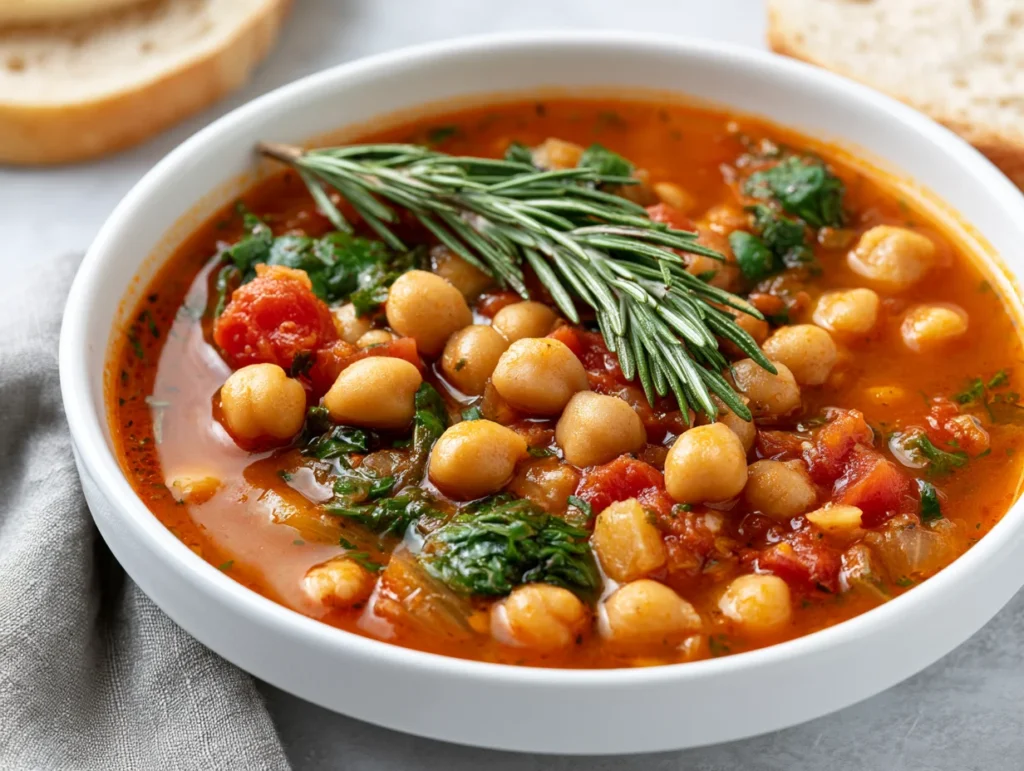
Prepare the Aromatic Base
Heat olive oil in a heavy-bottomed pot over medium heat. Add chopped onions and sauté slowly until they become soft, golden, and slightly caramelized. This step is essential for building the foundation of flavor. Add minced garlic and cook briefly until fragrant, ensuring it does not burn. Stir in cumin, smoked paprika, turmeric, and optional spices, allowing them to bloom in the oil. This releases their natural oils and deepens the stew’s overall aroma. Add tomato paste and cook for another minute to enhance richness and remove raw acidity.
Build the Stew Base
Add diced tomatoes to the pot and stir well, scraping any caramelized bits from the bottom. Pour in vegetable broth and bring the mixture to a gentle simmer. The liquid should start to thicken slightly as the tomatoes break down. Add bay leaf, salt, and black pepper, allowing the flavors to slowly integrate. Let the base simmer for about 10–12 minutes, stirring occasionally. This stage develops the stew’s depth and ensures a well-rounded, savory profile before adding the chickpeas.
Add Chickpeas and Simmer
Add cooked chickpeas to the simmering tomato base and stir gently to coat them evenly. Reduce the heat and allow the stew to simmer for another 15–20 minutes. This gives the chickpeas time to absorb the rich flavors of the broth and spices. The texture should become thicker and more cohesive as it cooks. If needed, add a splash of water or broth to adjust consistency. Taste and adjust seasoning before moving to the final step.
Finish and Serve
Turn off the heat and stir in fresh lemon juice to brighten the flavors. Add optional spinach or herbs if desired, allowing them to wilt gently in the residual heat. Remove the bay leaf before serving. Let the stew rest for a few minutes so the flavors settle and deepen further. Serve warm in bowls with crusty bread, rice, or flatbread for a complete and satisfying meal that highlights its rustic character.
Cook Time
Total:
40–45 minutes
Prep:
10–15 minutes
Bake:
None
Servings
This rustic chickpea stew is designed to be both nourishing and generous, making it ideal for everyday meals or relaxed gatherings. Makes approximately 4 to 5 servings, depending on portion size and serving style.
Each serving is hearty enough to stand on its own, especially when paired with bread or grains. The balance of protein, fiber, and spices ensures long-lasting satisfaction without heaviness.
For larger families or meal prep, the recipe can easily be doubled. The flavors deepen even further the next day, making leftovers especially enjoyable.
Common Mistakes in This Recipe
One common mistake is rushing the onion base. If onions are not properly caramelized, the stew lacks depth and natural sweetness.
Another issue is adding spices too late in the process. Spices need time in hot oil to release their full aroma and flavor potential.
Using under-seasoned broth can also weaken the overall taste. A bland base results in a flat stew, even if other ingredients are well balanced.
Lastly, overcooking chickpeas until they break down completely can ruin the texture, making the stew too mushy instead of hearty and structured.
Solutions to Common Mistakes
Take time to slowly sauté onions until golden and soft. This step builds essential flavor that cannot be rushed or skipped.
Bloom spices early in the cooking process by adding them to hot oil. This enhances aroma and ensures deeper integration into the stew.
Choose a well-seasoned vegetable broth or adjust seasoning gradually throughout cooking. This helps maintain a balanced and rich flavor profile.
Cook chickpeas until tender but still intact. This preserves texture and ensures each bite feels satisfying and structured.
Nutritional Information (approx. per serving)
- Calories: 280 kcal
- Protein: 12g
- Carbohydrates: 38g
- Fat: 9g
- Fiber: 10g
This stew is rich in plant-based protein, making it a filling and nourishing option for balanced everyday meals.
High fiber content from chickpeas supports digestion and helps maintain steady energy levels throughout the day.
The use of olive oil provides healthy fats that contribute to heart wellness and enhance nutrient absorption.
Spices like turmeric and cumin add natural anti-inflammatory properties, making the dish both flavorful and supportive of overall well-being.
Storage Instructions
Allow the stew to cool completely before transferring it to storage containers. This helps preserve texture and prevents condensation buildup.
Store in an airtight container in the refrigerator for up to 4 days. The flavors deepen over time, making it even more delicious the next day.
For longer storage, freeze in portions for up to 2 months. Thaw overnight in the refrigerator before reheating gently on the stove.
When reheating, add a splash of water or broth to restore consistency and maintain the stew’s smooth, rich texture.
Suggestions
Serve this stew with warm crusty bread to soak up the flavorful broth and enhance its rustic character.
For a more filling meal, pair it with rice, quinoa, or couscous to create a balanced and hearty plate.
Add a dollop of yogurt or a drizzle of olive oil before serving to elevate creaminess and depth.
Experiment with additional vegetables like carrots or zucchini for seasonal variation and added nutrition.
Seasonal Relevance
This stew is especially comforting during cooler months when warm, hearty meals are most appreciated.
In fall and winter, its rich spices and thick texture provide soothing warmth and nourishment.
During spring, it pairs well with fresh herbs and lighter sides, making it adaptable to changing seasonal preferences.
Even in summer, it can be enjoyed in smaller portions or at room temperature for a lighter yet satisfying option.
Final Words
Rustic chickpea stew is a reminder that simplicity often creates the most memorable meals. With just a handful of ingredients, it delivers depth, warmth, and comfort in every bite.
Its slow-cooked nature allows flavors to develop naturally, resulting in a dish that feels both traditional and thoughtfully crafted.
This is the kind of recipe that fits seamlessly into everyday cooking while still feeling special enough to share.
Once you make it, it becomes a dependable favorite that brings comfort and nourishment whenever you need it most.
Frequently Asked Questions
Can I use canned chickpeas instead of dried ones?
Yes, canned chickpeas work perfectly and save time. Just rinse and drain them before adding to the stew. They absorb flavors quickly and still provide a hearty texture, making them ideal for busy weeknight cooking without compromising taste or quality.
Can this stew be made in a slow cooker?
Absolutely. Sauté the base ingredients first, then transfer everything to a slow cooker. Cook on low for 6–7 hours or high for 3–4 hours. This method deepens flavor while keeping the chickpeas tender and the stew rich and well developed.
How can I make this stew spicier?
You can increase heat by adding chili flakes, fresh chopped chilies, or a pinch of cayenne pepper. Adjust gradually while tasting to maintain balance. The spices will blend well without overpowering the earthy, savory base of the stew.
Rustic Chickpea Stew Recipe
10
minutes40
minutes280
kcalThis rustic chickpea stew is a hearty, comforting dish made with tender chickpeas simmered in a rich tomato and spice base. Naturally nourishing and deeply flavorful, it’s perfect for cozy dinners, meal prep, or wholesome plant-based eating.
Ingredients
2 cups cooked chickpeas
2 tablespoons olive oil
1 medium onion, finely chopped
3 cloves garlic, minced
1 can (400g) diced tomatoes
1 cup vegetable broth
1 teaspoon ground cumin
1 teaspoon smoked paprika
1/2 teaspoon turmeric
1/2 teaspoon salt
1/4 teaspoon black pepper
1 bay leaf
1 tablespoon tomato paste
1 tablespoon lemon juice
1/2 cup spinach leaves (optional)
1/2 teaspoon chili flakes (optional)
1/4 cup chopped fresh parsley (optional)
1 teaspoon cumin seeds (optional)
1/2 teaspoon coriander powder (optional)
Directions
- Heat olive oil in a pot and sauté onions until soft and golden.
- Add garlic and cook until fragrant.
- Stir in cumin, paprika, turmeric, and optional spices to bloom in oil.
- Add tomato paste and cook for 1 minute.
- Pour in diced tomatoes and vegetable broth, then simmer.
- Add bay leaf, salt, and black pepper.
- Stir in chickpeas and simmer 15–20 minutes.
- Adjust seasoning and consistency as needed.
- Finish with lemon juice and optional greens or herbs.
- Remove bay leaf and serve warm.
Recipe Video
Notes
- Sauté onions slowly for deeper flavor.
- Bloom spices early for best aroma.
- Do not overcook chickpeas to maintain texture.
- Add lemon juice at the end for freshness.